Architecture · Cholon (District 11) · 8 November 2026
Two old faces of District 11: a Trần Quý shophouse and the Phú Thọ grandstand
A weathered 1960s-style family shophouse and the 1930s racecourse grandstand that may be kept as heritage, a few minutes apart in old District 11.
By HCMC Insider · 8 November 2026
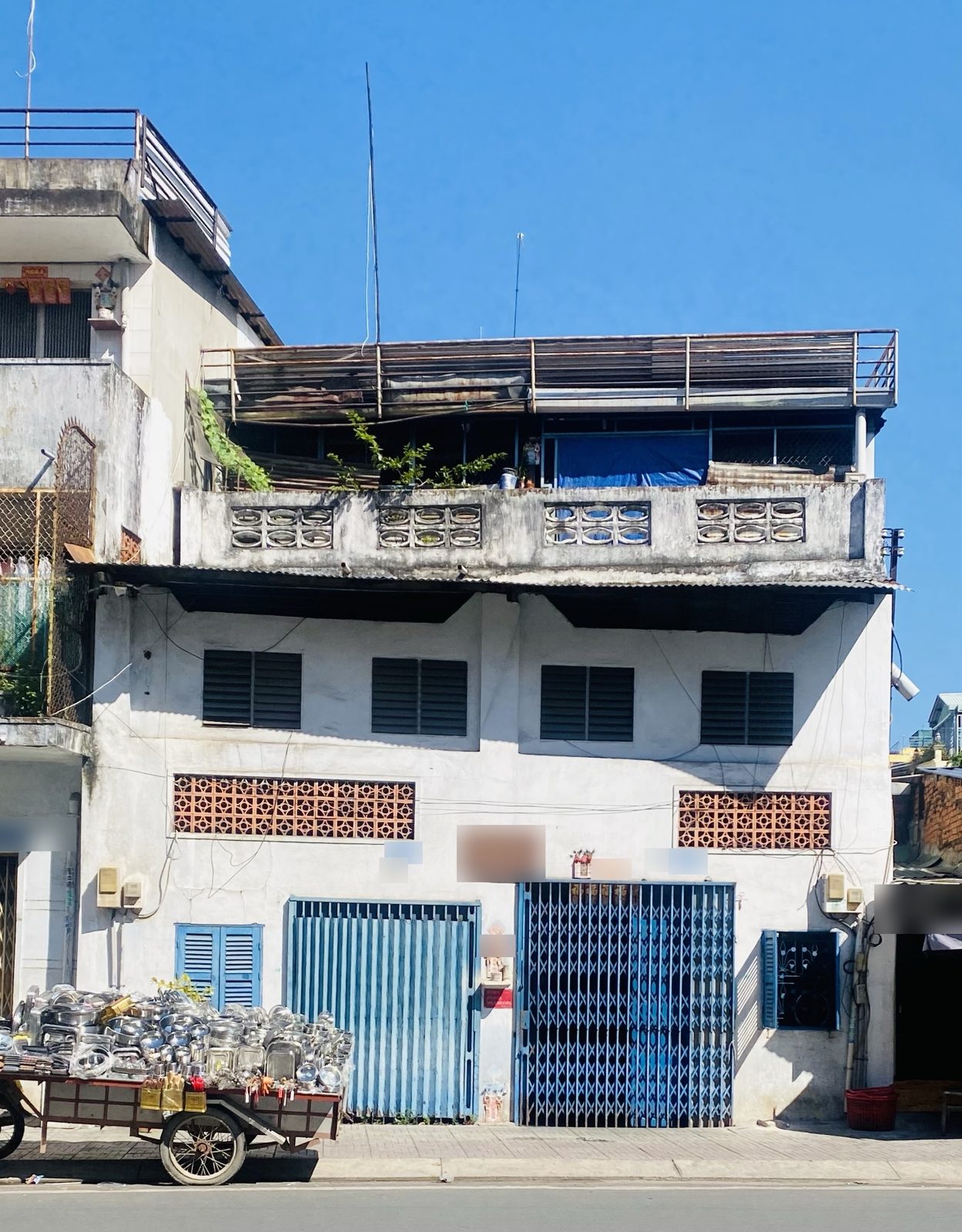
Two buildings I passed on one sunny morning in old District 11, only a few minutes apart. One is an ordinary family house, the other a landmark most of Saigon remembers. Both say a lot about how this part of Cholon was built.
The first is a double-fronted shophouse on Trần Quý Street. It is the kind of house Saigon built in great numbers after the 1950s: a reinforced-concrete frame, flat roof, lime-washed walls and no decoration for its own sake. Everything on the façade is there to deal with the climate.
Look at the panels of terracotta breeze blocks (gạch bông gió) above the ground floor. They let air and light in and keep the hard sun and most of the rain out, so the house can stay cool without air conditioning. Upstairs, dark louvred shutters do the same job. The parapet of the old roof terrace uses a second breeze-block pattern, in concrete rings.
Then come the layers added over the years: a corrugated metal awning over the windows, and on the roof a new storey of steel-pipe railings, tarpaulin and potted plants. Few houses here are ever rebuilt in one go, so a single façade often shows three or four decades at once. The black streaks are simply many rainy seasons on lime paint.
The ground floor is classic shophouse: a folding steel lattice gate and a slatted shutter that open the whole front, so the room can be a shop, a workshop or the family's front room depending on the decade. Next to the door is a small altar to the Earth God, as in most Cholon homes and shops. The morning I passed, a street seller had parked a cart of shining steel pots in front.
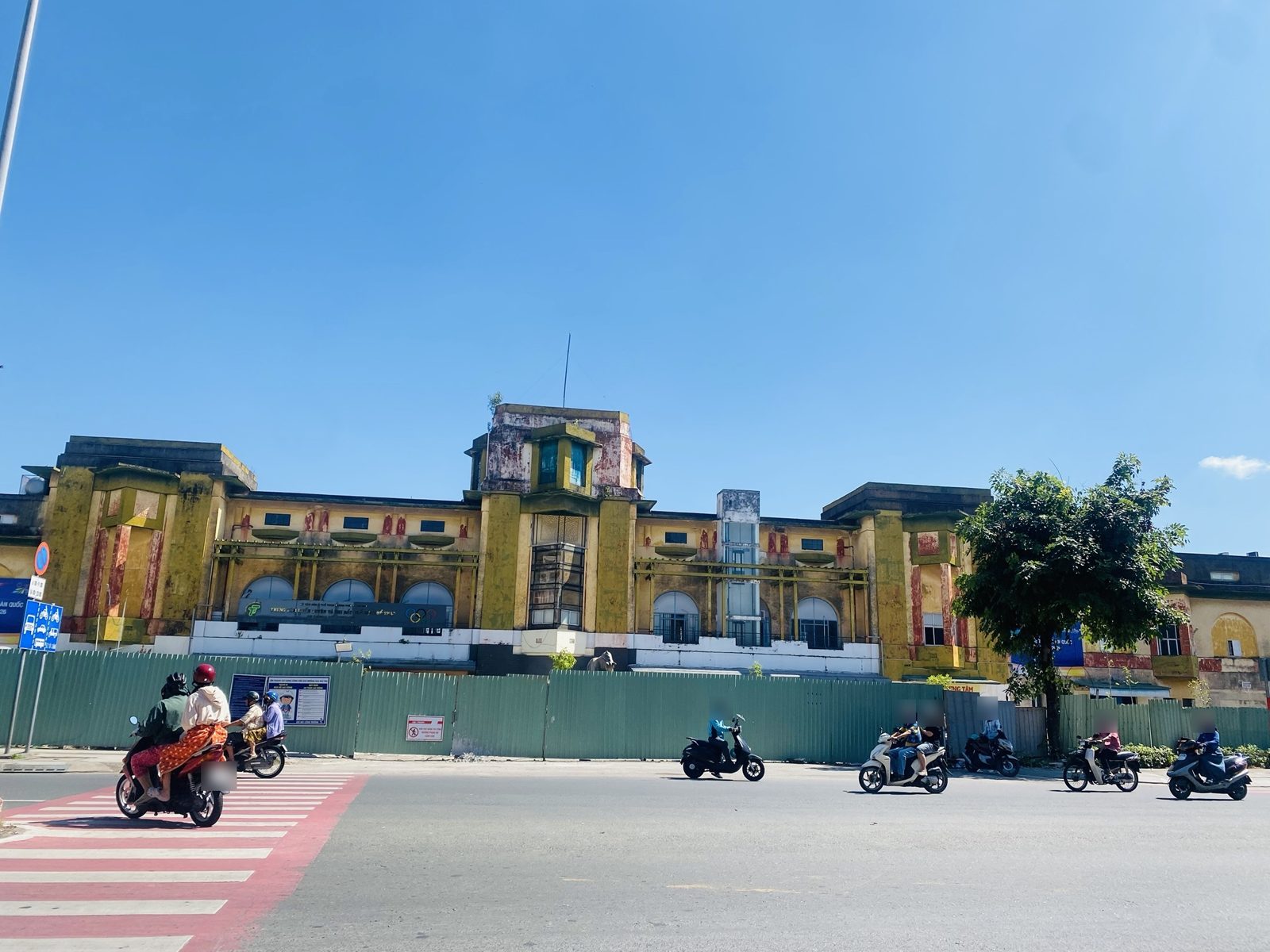
The second building is the grandstand of the Phú Thọ racecourse on Lê Đại Hành Street. The Saigon Racing Club bought the land, a former cemetery of more than 40 hectares, in 1932, and racing began in the mid-1930s. By the 1960s the track kept around 200 racehorses. Racing stopped in 1975, came back in 1989 and ended for good in 2011, when the site was turned over to the city's sports training centre.
The grandstand is a long, symmetrical block with stepped towers, flat projecting roof slabs, strong vertical piers and arched openings at street level. It reads as the Art Deco-influenced modern style that was fashionable in the 1930s: solid geometry instead of classical columns. Later additions sit on top of it, like the glass lift shaft and the sports centre's sign with the Olympic rings. The ochre and red paint is peeling, and small plants grow on the central tower.
The area around it is being rebuilt: five new roads through the old track, parks, schools, a circus and performing arts theatre and a renovated Phú Thọ indoor arena. The city's 2018 zoning plan says the existing grandstand is being studied to be kept as a cultural landmark, and press reports from early 2026 describe it still standing and used by the sports centre. Its final use has not been announced yet, so it is worth seeing while it still looks like this.
If you go: both are best seen from the pavement. The racecourse grounds are a construction site and are not open to visitors, and the shophouse is a private home, so please be discreet with your camera. Mornings give the best light on both façades.